Permanent Makeup Consultation: Questions to Ask Your LA Artist
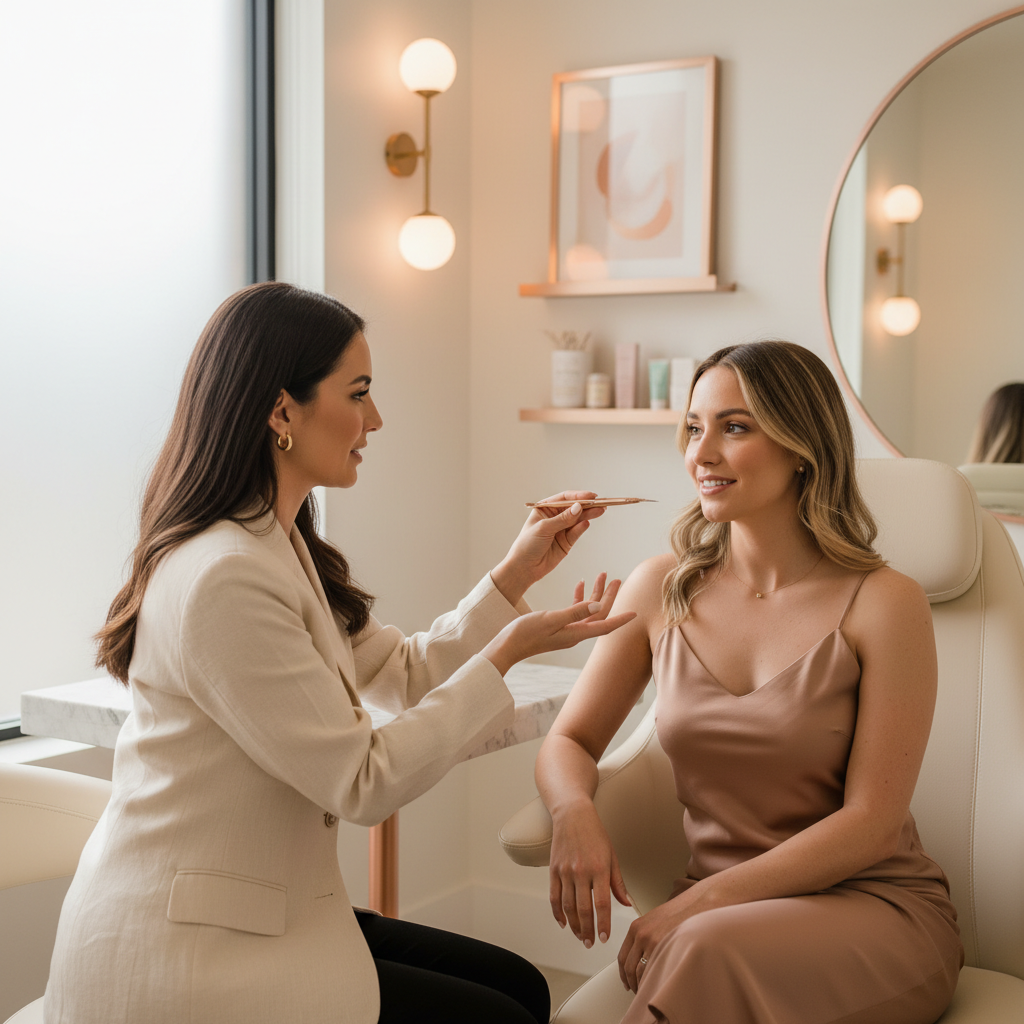
Permanent Makeup Consultation: Questions to Ask Your LA Artist
Your consultation is where artistry begins — not when the needle touches skin.
The difference between waking up with effortless brows and regretting a semi-permanent decision often comes down to what happens in that first conversation. A master artist doesn't rush this moment. They measure, assess, and listen before making a single mark.
If you're considering permanent makeup in Los Angeles, the consultation is your opportunity to evaluate not just the artist's portfolio, but their process, precision, and commitment to results that complement your features for years to come.
Here's what to ask — and what the answers reveal.
Why the Consultation Matters More Than You Think
Semi-permanent makeup isn't a retail transaction. It's a collaboration between your vision and an artist's technical mastery.
A thorough consultation accomplishes three things:
- Evaluates your skin type, lifestyle, and facial structure to determine which technique delivers the most natural, enduring results
- Establishes realistic expectations about healing, color retention, and maintenance
- Builds trust between you and the artist who will shape a feature you see every single day
Questions About the Artist's Training and Experience
"Where did you train, and how long have you been practicing?"
Technique matters. So does who taught it.
Artists trained in Seoul, for example, often bring a different aesthetic precision — one rooted in minimalism, symmetry, and skin-first design. Fifteen years of international practice means an artist has worked across skin types, face shapes, and cultural beauty standards.
Ask about:
- Formal training and certifications
- Continuing education (techniques evolve; artists should too)
- Specialization — some artists excel at microblading, others at ombre shading brows or lip blushing
What to listen for: Specifics. Not "I've done thousands of brows," but "I trained under [specific method] and have refined my technique working with mature skin, oily skin, and clients seeking natural restoration."
"Can I see healed results from clients with my skin type?"
Fresh work photographs well. Healed work tells the truth.
Pigment retention, color accuracy, and stroke clarity all reveal themselves weeks after the procedure. An experienced artist will show you healed photos that match your skin tone, texture, and desired outcome.
If you have oily skin, ask to see healed microblading on oily skin. If you're considering eyeliner tattoo, ask to see results on hooded eyes if that's your anatomy.
Red flag: Only before-and-after photos taken immediately post-procedure, or reluctance to show work beyond the first week.Questions About Technique and Customization
"Which technique do you recommend for my skin type and lifestyle?"
Not all brow methods work on all skin. A master artist tailors the approach.
- Microblading creates hair-like strokes but may blur on oily or mature skin
- Ombre powder brows offer soft, dimensional shading that ages gracefully across most skin types
- Combination brows blend both for texture and definition
Learn more about these distinctions in our guide: Ombre Powder Brows vs Microblading: Which Is Right for You?
"How do you determine shape, symmetry, and color?"
This is where artistry separates from formula.
Your bone structure, facial proportions, and natural coloring should guide every decision. An artist who immediately suggests "Instagram brows" without measuring your face isn't personalizing — they're replicating.
Ask how they:
- Map brow shape relative to your brow bone, eye placement, and nose bridge
- Select pigment based on your skin's undertone, not just your hair color
- Adjust for asymmetry (most faces have it; the goal is balance, not identical twins)
What to listen for: "We'll measure your facial thirds and adjust the arch to complement your eye shape" — not "This is the style everyone's getting right now."
Questions About Safety, Hygiene, and Licensing
"Are you licensed, and can I see your certifications?"
In California, permanent makeup artists must hold an active Body Art Practitioner license issued by the local health department.
This isn't optional. It confirms the artist has completed bloodborne pathogen training and operates under health and safety regulations.
Ask to see:
- Current Body Art Practitioner license
- Certifications from accredited PMU training programs
- Proof of liability insurance
Red flag: Hesitation, vague answers, or "I'm certified but don't have my license with me."
"What sterilization and safety protocols do you follow?"
Every tool that touches your skin should be single-use or properly sterilized.
Ask about:
- Use of disposable needles, blade cartridges, and pigment caps
- Autoclave sterilization for reusable tools
- Glove changes and workspace sanitation between clients
A master artist will welcome these questions. They're a sign you value your health as much as your aesthetic outcome.
Questions About the Procedure Itself
"What should I expect during the appointment?"
The procedure isn't quick — and that's a good thing.
A typical session includes:
- Consultation and shape mapping (15–30 minutes)
- Numbing (20–30 minutes)
- The procedure itself (1.5–2.5 hours depending on technique)
- Aftercare instructions and follow-up scheduling
Your artist should explain:
- What sensations you'll feel (pressure, light scratching — not "painless")
- How they'll check in with you throughout
- What the immediate result looks like (often darker and bolder than the healed outcome)
For a detailed breakdown of what happens before you arrive, read: How to Prepare for Your Microblading Appointment in LA
"What does the healing process look like?"
Healing is not linear. It's a process your artist should prepare you for.
Expect:
- Initial darkness and boldness (days 1–3)
- Flaking and lightening (days 4–10)
- The "ghost phase" where pigment seems to disappear (days 10–21)
- True color emergence (weeks 3–6)
Your artist should provide written aftercare instructions and be available for questions during healing. For a day-by-day visual guide, see: Lip Blush Tattoo Healing Process: Day-by-Day Recovery Guide
Questions About Longevity and Maintenance
"How long will this last, and when will I need a touch-up?"
Semi-permanent means it fades — gradually and gracefully when done well.
Longevity depends on:
- Technique (powder lasts longer than hair strokes)
- Skin type (oily skin fades faster)
- Sun exposure and skincare habits
- Pigment quality and depth of implantation
Most clients need a touch-up at 6–8 weeks to refine color and shape, then maintenance every 1–3 years depending on the service.
For more on this timeline, explore: Ombre Powder Brows Touch-Up: When Do You Really Need One?
"What happens if I don't like the result?"
A confident artist discusses this upfront.
While adjustments are possible, removal or correction takes time, skill, and often additional cost. That's why the consultation and patch test (if offered) are so critical.
Ask:
- What options exist for lightening or adjusting healed work
- Whether the artist offers correction services or refers out
- How they handle client concerns post-procedure
Questions About Pricing and Policies
"What's included in the price?"
Transparency matters.
Some studios include the touch-up in the initial cost. Others charge separately. Ask about:
- Initial procedure cost
- Touch-up pricing and timing
- What happens if you need correction beyond the standard touch-up
- Payment plans or deposit requirements
Understand the investment before you commit. For context on pricing across LA, read: Microblading Cost Los Angeles: Why Prices Range $300–$1,500
"What is your cancellation and rescheduling policy?"
Life happens. Policies should be clear.
Ask about:
- Deposit requirements and refund terms
- How much notice is needed to reschedule without penalty
- What happens if you need to cancel the day of due to illness
Red Flags to Watch For During Your Consultation
Not every artist is the right fit. Trust your instincts if you notice:
- Rushing through the consultation or pressuring you to book immediately
- No customization — offering the same shape, color, or technique to every client
- Unwillingness to answer questions or dismissive responses to your concerns
- No portfolio of healed work or only showing fresh procedures
- Unclear licensing or vague safety protocols
- Promising "painless" or "permanent" results — both are misleading
What a Great Consultation Feels Like
You should leave feeling informed, not overwhelmed. Confident, not confused.
A thorough consultation includes:
- Time to ask every question without feeling rushed
- Visual aids — mapping, color swatches, healed photos
- Honest answers about what will and won't work for your skin and goals
- A clear next step, whether that's booking or taking time to consider
At Perfect Line, consultations are where precision begins. We measure twice, consult thoroughly, and only proceed when the vision is aligned. Because your face deserves more than a trend — it deserves artistry that endures.
Your Consultation Checklist
Before you leave, make sure you have clarity on:
- [ ] The recommended technique and why it suits your skin
- [ ] The artist's training, experience, and licensing
- [ ] What the procedure day will look like
- [ ] Healing timeline and aftercare requirements
- [ ] Total cost including touch-ups
- [ ] Safety and sterilization protocols
- [ ] Portfolio of healed results on similar skin types
- [ ] Cancellation and rescheduling policies
Book Your Consultation with Confidence
Choosing an artist isn't about finding the most followers or the lowest price. It's about finding the master-level precision that treats your face with the reverence it deserves.
Trained in Seoul. Refined over 15 years of international practice. Based in the heart of Koreatown.
Explore our full range of services and see the difference that quiet mastery makes. Your consultation is the first step toward features that feel effortlessly, timelessly yours.
For answers to the most common questions clients ask before their first visit, read: Top 5 Questions About Permanent Makeup Los Angeles Answered
Master-level artistry.
Koreatown's PMU studio.
Seoul-trained. 15+ years of precision. Every technique is tailored to your skin type, bone structure, and lifestyle. No cookie-cutter results.